What Is the DMW?
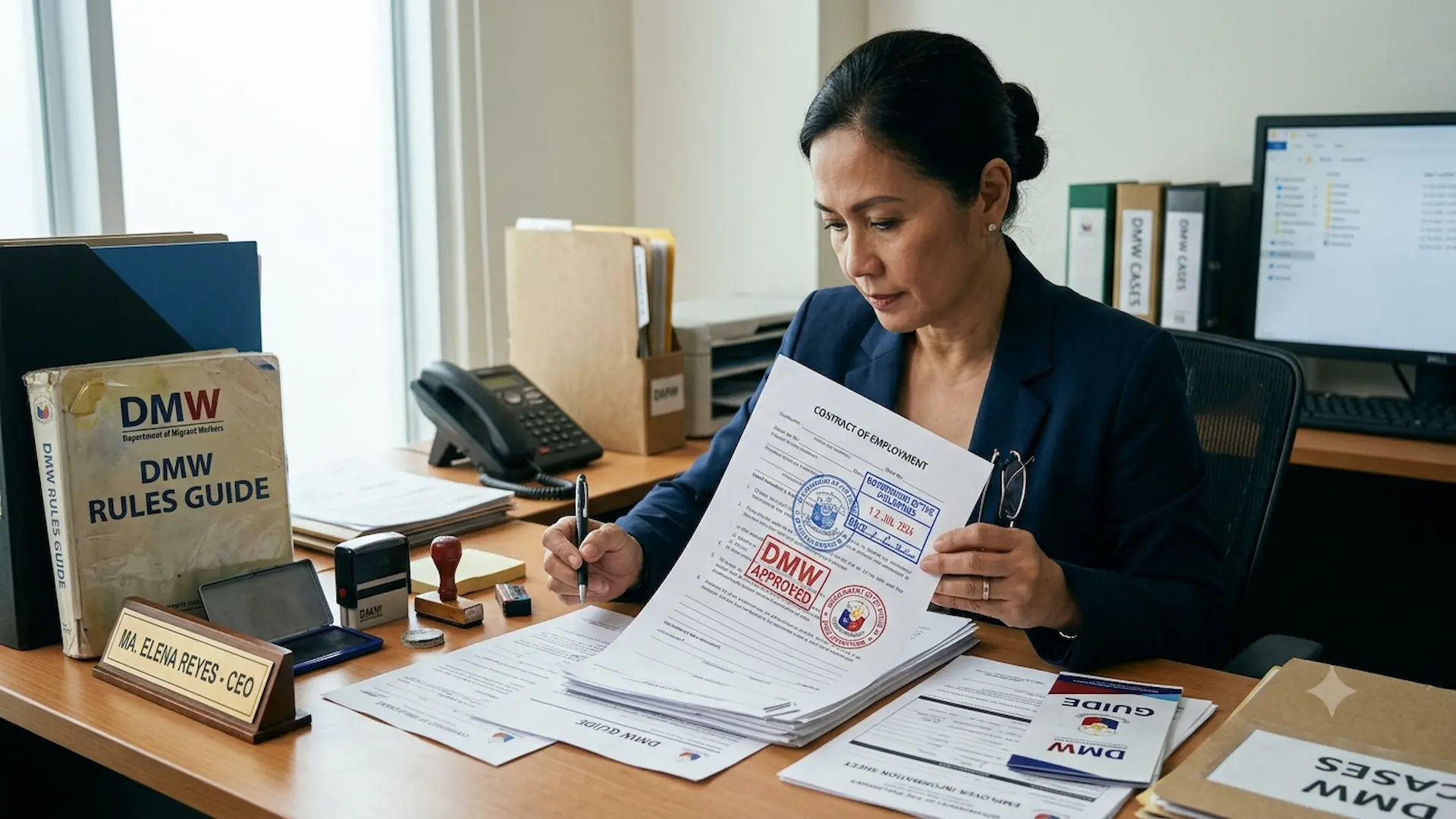
The Department of Migrant Workers (DMW) is the Philippine government department that regulates the deployment of Filipino workers abroad. It was created under Republic Act 11641 and took effect in February 2022, absorbing the functions of the former Philippine Overseas Employment Administration (POEA) and several related offices. If you've worked with Philippine recruitment before and remember "POEA," the DMW is its successor — the rules and licensing functions carried over.
The DMW licenses recruitment agencies, approves job orders, sets minimum contract standards, and can blacklist non-compliant foreign employers and principals. No Filipino worker can be legally deployed abroad without a DMW-approved job order, regardless of what any private employment contract says. Bypassing the process exposes an employer to blacklisting, which bars future hiring through licensed agencies.
Employer Requirements
Foreign employers must be accredited through a DMW-licensed recruitment agency before hiring can begin. In practice this means:
- Company registration documents and proof that the business is legitimate
- A duly authenticated Special Power of Attorney (SPA) authorising the Philippine recruitment agency to act on the employer's behalf
- A signed Employer's Undertaking committing to DMW contract standards
- For domestic-worker employers: completion of an employer orientation programme
Accreditation is tied to the agency that processes it — it doesn't transfer automatically if you switch Philippine partners. Documentation requirements also vary by destination country, so it's worth confirming the specifics for your jurisdiction early rather than discovering them mid-process.
Contract Standards
The DMW sets minimum contract terms that a private agreement cannot undercut. Key standards include:
Salary: Must meet or exceed the prescribed minimum for the destination and job category. For Filipino domestic workers in Singapore, note that the minimum salary is set by the Philippine government rather than by Singapore's MOM — a nuance that catches out first-time employers.
Working hours: Standard limits apply, with overtime provisions for hours worked beyond them.
Accommodation: For live-in roles, the employer provides free, adequate housing.
Return airfare: The employer bears the cost of the worker's return ticket at end of contract, and it cannot be deducted from wages.
Repatriation: In cases of employer-initiated termination, the employer is responsible for repatriating the worker within the prescribed period.
Any clause that contradicts these standards is void — but the worker's entitlements under the standards still stand.
Common Pitfalls
The issues we see most often among first-time overseas employers:
Salary substitution — presenting a lower-paying contract on arrival than the one approved. This is a serious offence and grounds for blacklisting.
Excessive working hours — treating live-in staff as on-call around the clock with no rest day. Rest-day rules in the destination country apply on top of Philippine standards.
Job substitution — assigning a worker to a role different from the approved job order. A household worker cannot simply be reassigned to a commercial role without a new job order.
Delayed salary — withholding or delaying wages, sometimes used to discourage a worker from leaving.
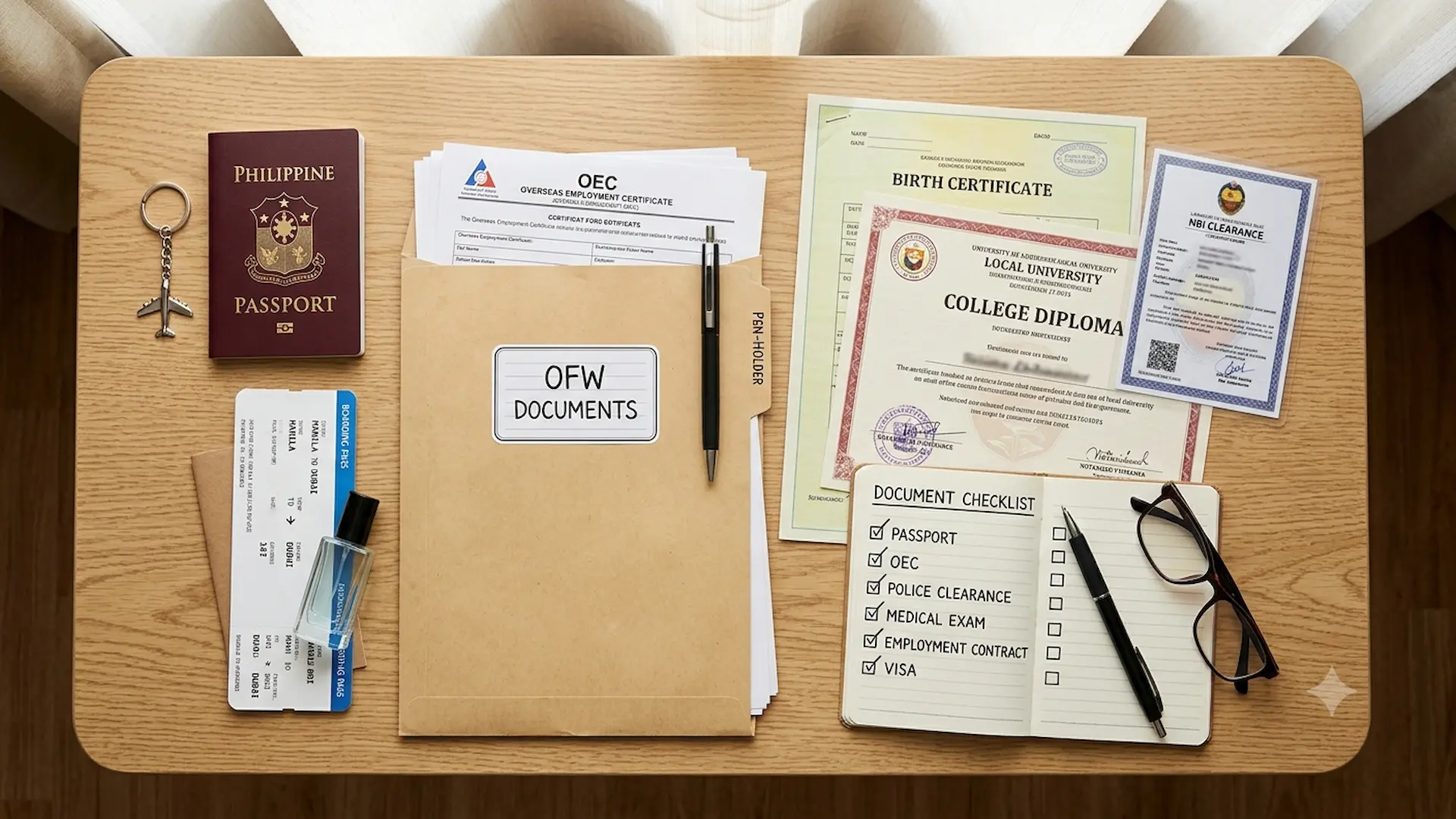
Document confiscation — taking a worker's passport or OEC. This is illegal under Philippine law and in most destination countries.
None of these are grey areas. They're the categories that turn a deployment into a dispute.
How Philore Helps
Our compliance work runs in-house rather than outsourced, which means faster turnaround and clearer accountability when something needs resolving. We handle the documentation lifecycle — accreditation, job-order approval, OEC processing, and the pre-departure briefing.
Since we began operating in 2019, a compliance checklist signed off by our legal team has been a fixed step before any worker travels. It isn't a marketing line; it's the gate that keeps deployments from stalling at the airport or unravelling later.
For employers new to hiring from the Philippines, we offer a no-obligation compliance consultation to map your requirements and flag jurisdiction-specific issues before you commit to recruitment.
Ready to hire?
Get a staffing plan built for your timeline.
Tell us your role, volume, and destination — we'll respond within 24 hours.